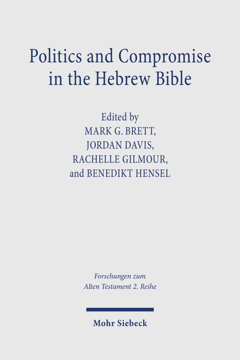
Die Beiträge dieses Bandes befassen sich mit dem Kompromiss als sozialer, literarischer und theologischer Strategie in der Hebräischen Bibel. Die biblischen Autoren setzten ihn als bewusstes rhetorisches Mittel ein, um Autorität, Gemeinschaftsgrenzen und Bundesideale auszuhandeln.
Die Beiträger dieses Bandes lesen den Kompromiss als soziale, literarische und theologische Strategie der hebräischen Bibel. Er ist dabei kein zufälliges redaktionelles Nebenprodukt, sondern ein bewusstes rhetorisches Mittel, mit dem biblische Autoren über Autorität, Gemeinschaftsgrenzen und Bundesideale verhandelten; in genauen Textanalysen und theoretischen Überlegungen zeigen die Beiträge, wie Verhandlungen, Zugeständnisse und »faule Deals« artikuliert, gerechtfertigt oder verurteilt werden und wie solche literarischen Darstellungen Identitätskonstruktionen von »Israel« und/oder dem »Anderen« widerspiegeln oder in Frage stellen.
Inhaltsübersicht:
Mark G. Brett and Rachelle Gilmour: Introduction. What is Political Compromise?
I. Prequels and Prolegomena
David M. Carr: Uncompromising Lordship. The Genesis 1-11 Etiology of Trans-species Structures of Divine and Human Domination in Interreligious Perspective - Megan Warner: Beginning at the Beginning. Compromise in Genesis? - Megan B. Turton: Strategic Ambiguity and Covenant Compromise in MT Exodus 19-24 - Gili Kugler: Israel's Encounter with Brother Edom. Tracing Compromise in Political and Religious Narratives - Benedikt Hensel: Caleb the Edomite or Caleb the Judahite? Joshua 14:6-15 and 15:13-19 and the Narrative Negotiation of Idumea, Judah, and Biblical Israel in the Context of Emerging Judaism(s) in the Persian and Early Hellenistic Periods
II. Monarchies and Alliances
Mark G. Brett: Palace-Clan Relations and the Formation of Segmentary States in the Iron Age - Lena-Sofia Tiemeyer: David, the Ephrathite. Justification, Disinformation, or Compromise? - Rachelle Gilmour: Coups and Compromise. Judahite Royal Mothers in the Book of Kings - Natalie F. Mylonas: The Gendered Dynamics of Compromise in Prophetic Marriage Metaphors
III. Exiles and Imperial Jurisdictions
Jordan Davis: Jeremiah MT 37-44. The Subversive Retelling of a Golah-oriented Narrative - Philip P. Chia and Mark G. Brett: Theo-Political »Compromise«? Interpreting Zerubbabel in East and Southeast Asia - Tamara Cohn Eskenazi and Jacob L. Wright: Reconceptualizing Peoplehood as a Response to Entrenched Imperial Rule. Ezra 9-10 and Nehemiah 9-10 - Samasoni Moleli Alama: Concessional Compromise in Chronicles. Reconfiguration of Kingship in the Postexilic Period - Brian Fui Kolia: Pushing Political Agendas from the Diaspora. A Talanoa of Qohelet with Samoan Politics - Ian Young: Politics and Compromise in the Animal Apocalypse