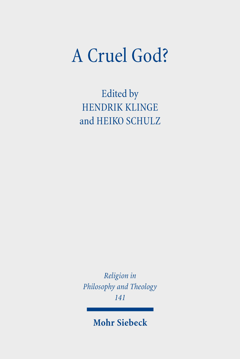
Do God's emotions, desires, and commands determine what is morally good? And if so, must we take the idea of a potentially cruel God seriously? The contributors discuss these questions by dealing with the divine command theories, alternative approaches to a decidedly religious metaethics, and fundamental questions of theological ethics as a whole.
What contribution does the doctrine of divine command make to the foundation of normative ethics? What role does divine will play in metaethics? Do God's emotions, desires, and commands determine what is morally good? And if so, must we take the idea of a potentially cruel God seriously (not only) in theological terms? Do all ethics have religious roots? Or does this only apply to some or none of their actual and/ or possible versions? These and related questions have been addressed by ethics and philosophy of religion in the Anglo-American world for some time. However, Germanophone research, both within and outside theology, has so far only dealt with them marginally. This anthology therefore brings together representatives of German- and English-speaking theology and philosophy of religion to discuss these and similar questions. The contributors focus specifically on the so-called divine command theories, alternative approaches to a decidedly religious metaethics, and fundamental questions of theological ethics as a whole. In addition to examining current theses and theories, they also shed light on the historical and interreligious dimensions of the topic. Last but not least, the contributors to this volume aim to intensify the dialogue between continental and analytical traditions of religious philosophy and ethics.
Table of contents:
Hendrik Klinge und Heiko Schulz: Introduction -
Michael Almeida: Impossible Commands -
C. Stephan: Evans Voluntarism, Divine Command Theory, and Accountability to God -
Wes Morriston: A Defensible Divine Command Theory? -
Bruno Niederbacher SJ: Der Theistische Aktivismus und das Euthyphron-Dilemma -
Mariam al-Attar: Anchoring Morality in the Islamic Intellectual Tradition: A Critical Review -
Thomas Wagner: Due to a Lack of Knowledge: Pragmatism as an Ethical Principle in the Book of Qohelet -
Lydia Schuhmacher: What Can God Command? Early Franciscans on Divine Power -
Thomas Carson: From the Preference-Satisfaction Theory of Value to the Divine Preference Theory: An Alternative Foundation for Theistic Moral Theories -
Christian B. Miller: A Modified Divine Desire Theory of Obligation -
Johannes Grössl: God's Character as Foundation of Morality? An Evaluation of Divine Motivation Theory -
Hendrik Klinge: What Are Divine Reasons Theories And Why Do They Fail? -
Lukas Ohly: The Beautiful Does Not Appear in the Seeing Eye -
Knut Berner: Victim of... Opfer-Denken als Exempel für die Problematik des Guten -
Marco Hofheinz: „Was heißt die Wahrheit reden und also nicht lügen?" Ein kontextualisierender Kommentar zu Karl Barths gebotsethischer Argumentation -
Heiko Schulz: Gibt es (etwas Anderes als) eine theologische Ethik?